Frequency log · 130–145 BPM

Sound under pressure.

UK drill production works through subtraction. The strongest records do not fill every bar; they leave enough air for a bass slide to feel architectural.

Here, sound is treated as a material system: percussion marks the edges, voices carry location, and silence becomes a controlled source of tension.

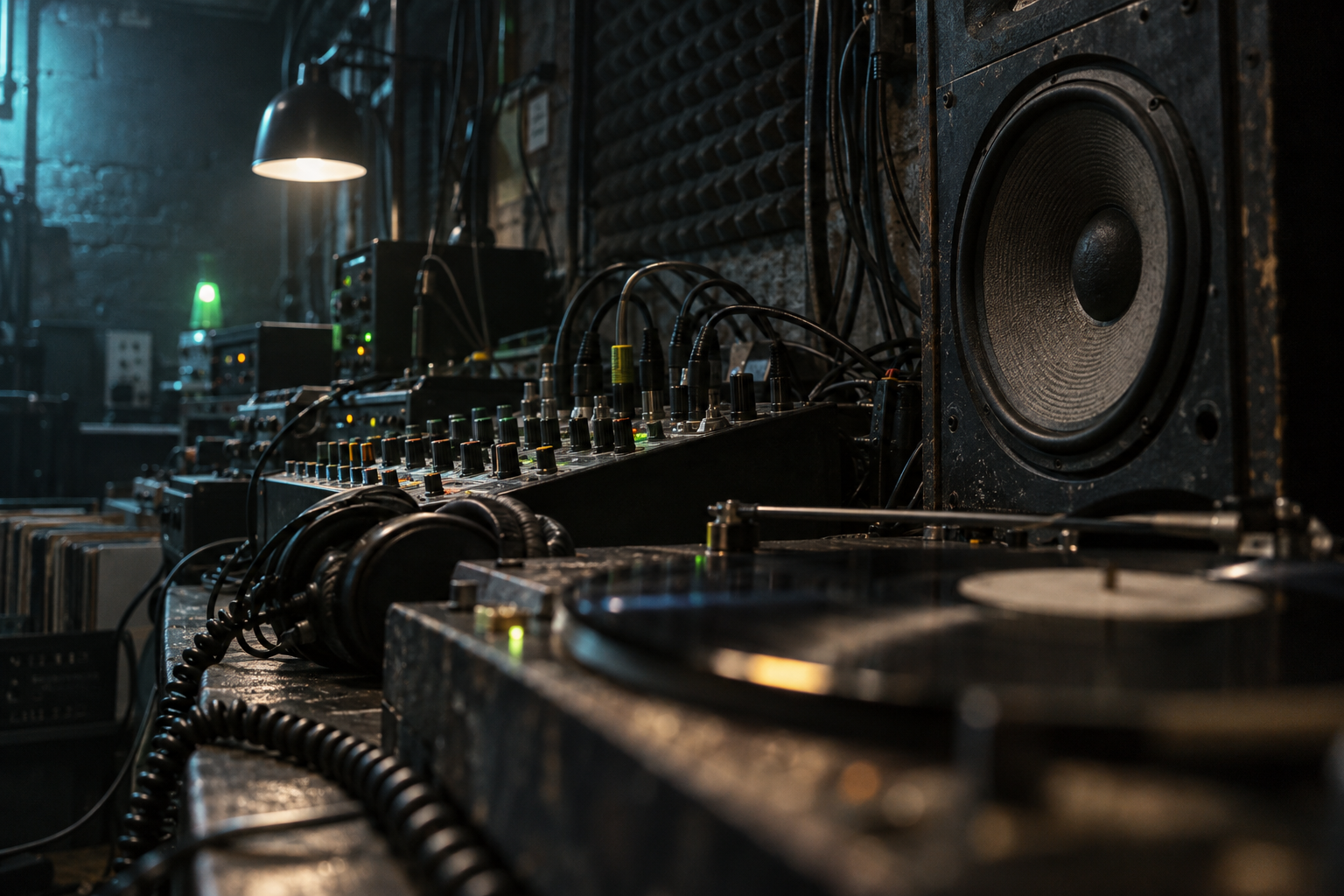
Mixing desk, cables and speaker in a dim underground radio room
01 / Negative space

Silence hits first.

A drill instrumental often feels crowded even when very little is playing. That sensation comes from placement: a dry snare, an interrupted hi-hat run, a bass note that bends after the kick rather than landing with it. The gaps are not empty. They are the part that makes the next sound arrive with weight.

02 / Low end

Bass as movement.

The sliding 808 is less a sustained note than a route through the bar. Pitch motion makes static speakers feel mobile and lets a small phone speaker imply a system much larger than itself. Good mixes preserve that path without burying the vocal or sanding away the distortion that gives it character.

03 / Transmission

Radio discipline.

Before playlists made every scene instantly visible, pirate radio rewarded economy. Identifiers had to land quickly; mixes had to survive imperfect reception; a voice needed presence without studio gloss. Drill inherited that instinct for immediate, compressed communication.

A listening sequence.

Not a playlist of names—a map of production decisions. Move through it in order and notice how tension changes without the tempo moving much at all.

Cold open / room tone

00:00 · atmosphere

Dry snare / hard edge

01:12 · percussion

Pitch slide / false floor

02:48 · low frequency

Voice / close distance

04:10 · presence

Cut signal / afterimage

05:36 · silence